
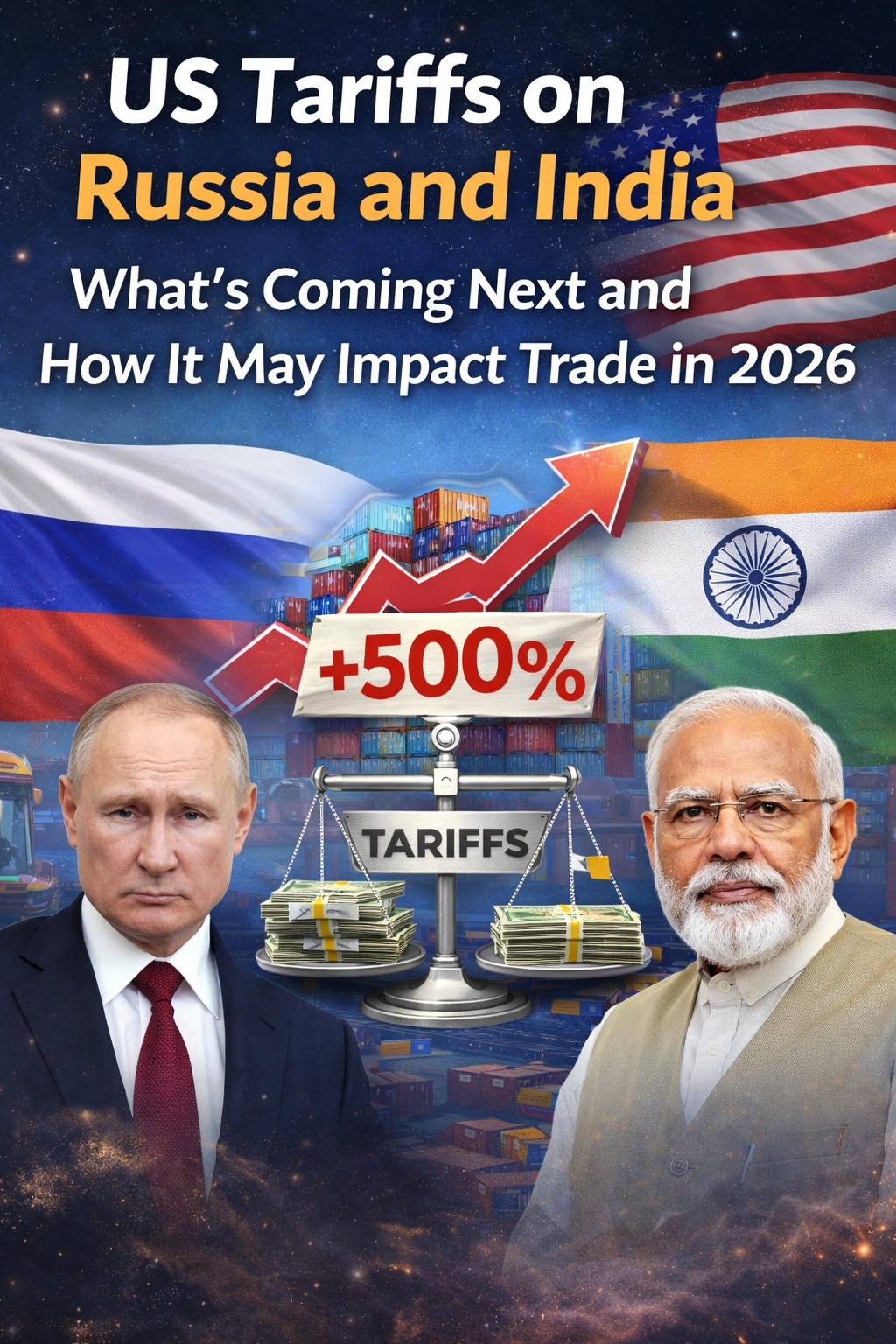
In 2026, trade tensions involving the United States, Russia, and India are intensifying as the U.S. pushes new tariff measures tied to geopolitical and energy policy concerns. Major developments include proposals allowing steep tariffs for countries that continue to import Russian oil, ongoing trade disputes with India, and broader implications for global markets.
Thank you for reading this post, don't forget to subscribe!Below, we break down the latest tariff news, proposed legislation, and what it might mean for India and global trade.
1. Proposed U.S. Bill Could Impose Tariffs Up to 500% on Russian Oil Buyers
A key development is the so-called Sanctioning Russia Act of 2025, a bipartisan bill backed by U.S. lawmakers that would allow the United States to impose tariffs as high as 500% on countries that continue to purchase Russian energy products, including oil and gas. The legislation has received support from Republican leaders and could be brought before Congress soon. The Times of India+1
The purpose of these tariffs is to exert economic pressure on countries that the U.S. believes are indirectly supporting Russia’s war effort in Ukraine by purchasing discounted Russian energy. If enacted, the law would give Washington broad authority to set punitive duties on imports from nations that maintain significant energy trade with Russia. Millat Times
2. India and China Named as Potential Targets
India and China — major importers of Russian crude — are explicitly named as potential tariff targets under the proposed sanctions bill. U.S. President Donald Trump and allied senators have highlighted these countries as examples of nations that may face high duties unless they significantly reduce their Russian oil imports. South China Morning Post+1
India is already facing higher tariffs on many of its exports to the U.S., including a tariff hike that raised duties to around 50% on several Indian goods as part of ongoing trade friction. These measures were linked in part to U.S. displeasure with India’s energy policy and continued Russian oil purchases. Reuters
3. Economic and Market Effects of Tariff Threats
News of potential 500% tariffs and escalating trade tensions has already affected markets. For example, Indian stock benchmarks, including the Nifty 50 and Sensex, recently experienced notable declines, driven by investor concerns over rising U.S. tariffs and increased trade risk. Reuters
The prospect of punitive duties makes Indian goods more expensive in the U.S. market, weakening demand and pressuring exporters in sectors such as apparel, technology, and commodities. The uncertainty surrounding trade policy has led to broader selling in equity markets as investors price in potential negative impacts. INDmoney
4. Diplomatic Push and Tariff Negotiations
India has engaged in diplomatic efforts to mitigate tariff pressures. According to reports, New Delhi has sought tariff relief from the U.S. by emphasizing its reduced purchases of Russian crude and engaging with U.S. lawmakers to seek a rollback of additional duties. The Times of India
Analysts suggest that resolving tariff disputes may be a necessary step before a comprehensive trade agreement between India and the United States can be finalized, as tariff friction has hindered progress in negotiations. Wikipedia
5. Broader Strategic and Geopolitical Context
The U.S. tariff strategy is closely tied to geopolitical objectives. By targeting countries that continue to import Russian energy, Washington aims to globally isolate Russia’s economy and reduce revenue streams that are viewed as supporting its military actions in Ukraine. Millat Times
For countries like India, which have historically balanced strategic autonomy and energy security, tariff threats add complexity to diplomatic and economic decision-making. As global energy patterns evolve and geopolitical alignments shift, tariff policies remain a key tool of U.S. foreign economic strategy. carnegieendowment.org
6. What’s Next for Tariffs and Trade Relationships?
Key points to watch in 2026:
- Congressional action on the Sanctioning Russia Act could unlock tariff increases up to 500% for Russia oil buyers.
- Further negotiations between India and the United States over tariff relief and broader trade cooperation.
- Market response to uncertainty, with potential volatility in export sectors and stock indices.
- Continued diplomatic efforts by India to diversify energy sources and reduce reliance on Russian crude.
Summary
Tensions over tariffs between the United States, India, and other nations reflect the intersection of trade policy, geopolitics, and energy security. With proposed tariff legislation capable of imposing extremely high duties on Russian oil buyers, countries like India face important economic and strategic decisions that could shape trade relations and market outcomes in 2026 and beyond.